

delabs circuits
Electronic Engineering Schematics
Electronics Theory and Tutorials
- Industrial Process Control Applications
- Process Control Instrumentation
- Instruction Manuals -
Control Panels
- Test & Measurement Instruments
- Tutorials on Basics and Instrumentation
- Tutorials on Digital Electronics
Soldermans Basics - Tutorials, Theory, Fundamentals
Circuits FAQ - Electronics Design Notes and Answers.
Learning electronics in theory by studying books is the conventional way, this method may help in History and Maths. Maths needs a paper and pencil for practicals and history needs a well equipped Library. In these modern times, the web has made access to wide range of learning information easy, which is true Knowledge Empowerment. The greatest gift a Child can get from the Parents or School, is Knowledge.
As an Electronics Engineer i had always needed data sheets and application notes. The web makes these documents and learning resources not only accessible to all, but searchable too.
Now coming back to Maths and History; a computer, some programs and the Internet can create a "Practicals" for these Subjects. In case of Mechanical, Electrical and Electronics it is not so simple. You need to have many components and some test instruments and most important; a Soldering Iron to build-n-learn practically.
Process Control Instruments
These are some instruments i manufactured when i used to run my own industrial automation business.
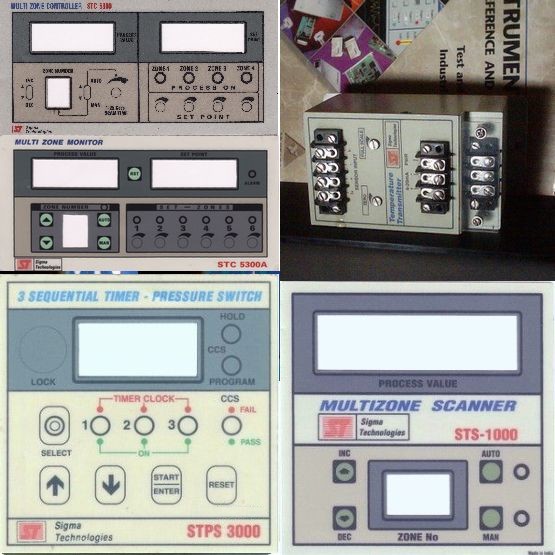
Now many Virtual Electronics Workbench Software and Interactive Tutors are available, these aid learning. We have to design, build and apply some electronic ideas in 3D Hardware, for complimenting the Book, Academic or Web learning. Practical and Theoretical study in electronics has to be in Tandem, this is possible only when Industry works with Universities to create real talent and skills in students. The applied technology is evolving, hence the academic education must be relevant when the student gets into his first job.
- Basics of Electronics
- Design of a Constant Current Source
- Electronics Product Design Development
- Electronic Product Production Manufacturing
Here are circuits made of Resistors, Capacitors and Inductors which are passive components. Crystals, Thermistors, Varistors, Variable Passive RLC are also Passive Parts.
Circuits using only
discrete devices and here are some basic Electronic Tables and Charts
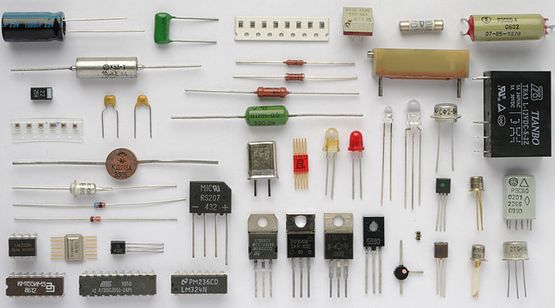
Parts like Switches, Connectors, Relays and PCBs are ElectroMechanical parts. Nuts, Bolts, Screws, Cabinets and enclosures are Mechanical parts.
For a Systems Integrator or Control Panel Designer, the Timers, Controllers, PLC which are Electronic Products become Components or Modules along with Contacters, Current Transformers, AC-DC Drives etc.
Learn about the Types of Components
Design Notes - Components Selection
(These are notes jotted down in the 90s, it may have spelling and other errors)
Selecting the parts for your product design, choosing the components intelligently is a part of Product Design Engineering.
Budget, Availability, Size, Alternate Vendors, Product Life and Quantity to be manufactured are some factors that determine the selection of a prudent and experienced design professional.
To choose the right type of part, an exhaustive knowledge of the behavior of passives and discretes is essential. Some points i remember among the things that i learnt the hard way are listed below.
- Over rate components at least double, if you need a 1A-100V-100uS diode, use a 2A-200V-50uS diode.
- Electrolytic capacitors have a shelf life, if you need to store them you have to charge them every month.
- Gold plating is used in connectors because it has low contact resistance and does not corrode or react
- Use a 100uF and 0.1uF CD in parallel to filter because the inductance of 100uF is a lot (the electrodes are wound as in a coil) and high frequency passes over and is filtered by the 0.1uF which has negligible inductance.
- Ceramic capacitors leak a bit, electrolytics leak a lot but plastic or mica capacitors do not leak at all, near perfect. An oscillator with a RC time setting needs a plastic cap for stability.
- In industrial electronics equipment, connectors are a source of many problems, hence avoid connectors. vibrations, corrosion and frequent usage will result in strange problems.
- Small signal diode 1N4148 switches at 4nS, current of 70mA and 70V withstand capacity.
- 2N2222 and 2N2907 form a fast switching NPN-PNP pair and have been around for decades.
- LED displays are best indoors and are not so good for sunlit outdoors, LCD is good for that.
- All electromechanical parts like switches, relays, connectors and pots have limited number of operations.
- Failure of parts are when parts are stressed beyond limit, bad environment, misuse, infant mortality and normal aging.
- Most pots have a dielectric insulation between metal pot shaft and terminals of 1KV or more. Some commercial pots may have lesser breakdown voltage and that will be a product safety issue. So either way use Plastic Knobs or pots with plastic shafts.
- Solderman Talks 1702 AD
Forms of delabs
- MeeeT Hub - EEE
Community.
- delabs forge -
Collaborate.
- EE Circuits - Add Schematics.
- Web Resource - Add
Websites.
- Electronic Products - Promote.
- delabs Mint - Business Listings.
Boards of delabs
...
...
...
delabs Technologies
22nd Feb 2022
...
The documents, software, tools and links are provided to enhance the ability of an electronics student, hobbyist or professional by sharing information. The information, links etc. should be used by the website visitor, at his or her own risk and responsibility. There may be concept, design and link errors in the pages.
Creative Work, ideas and documents of delabs can be used for Product Design and Development by R&D Engineers, Hobbyists, Students and even firms for creating useful products. These cannot be used for reprint, replication or publishing online or offline.