

delabs circuits
Electronic Engineering Schematics
Fluid or Water Level Indicator with Reed Relays
The Reed Relay based Float Switches are used in Automobiles and even corrosive and volatile fluids. This can also be used to indicate level of water or operate pumps.The reeds are hermetically sealed in glass, Like the
Incandescent bulb. The signal switched by reed also should be
a few mA or even uA. This makes is safe in Volatile fluids,
where sparking can cause fires.
This is a way by which you can monitor the level of fluids like water in a tank. Based on data from the sensor you can control things like solenoids or motors as required or even turn on a buzzer, hooter or annunciator in a control panel.
Optical
Retro-Reflective Proximity Switch
Description.
Look at the picture, the float can be a Styrofoam type with a
couple of ceramic magnets stuck inside. The float must move
freely up and down a long plastic pipe of around 10 mm dia. If
the fluid is not water but a solvent then design a non-soluble
float or coat the float you made with something like an epoxy
resin.
Flow
Measurement and Control
Then you need to assemble a small circuit within the long
plastic pipe. Many reed relays with a chain of resistors in
series has to be inserted in the pipe. The resistor and the
glass reed relays should be in different levels of the pipe
where you need an alarm or indication. Seal the pipe
hermetically at both ends with epoxy resin after taking out a
shielded cable of just 2 wires + 1 ground shield.
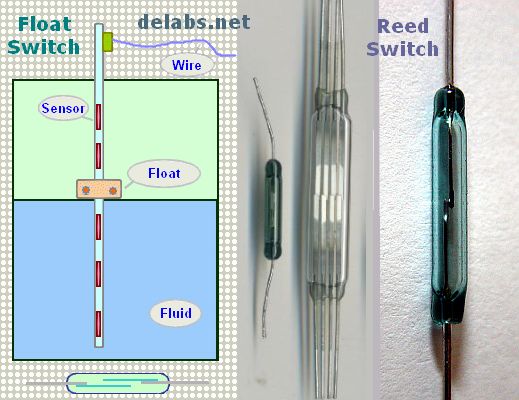
When the fluid level changes, the float moves up or down with it, when the float moves over a section of pipe where the reed relay is mounted, the magnets on the float make the reed operate and the resistance of the sensor changes.
The resistance is measured and the alarm can be operated as
you like. The advantage of this arrangement is the electric
circuit does not come in contact with the fluid, no sparking
risk.
At one time i wanted to make reed relays, it was a good spot to be in, as it was used in Telecommunications. Even Small Office EPABX systems would have quite a Few of them.
It was Simple, get some reeds from OKI and wrap them up in some copper coil and Pot them in a plastic can with epoxy. Before i could get even some trials out, the market was flooded with Good Quality Reed Relays from many.
So the Lesson, "Time to Market" should be minimum without sacrificing Quality. That brings us to another metric, The TTM/Q Ratio ;-) . This should not be mixed up with "Time to Exhibition or Trade Show".
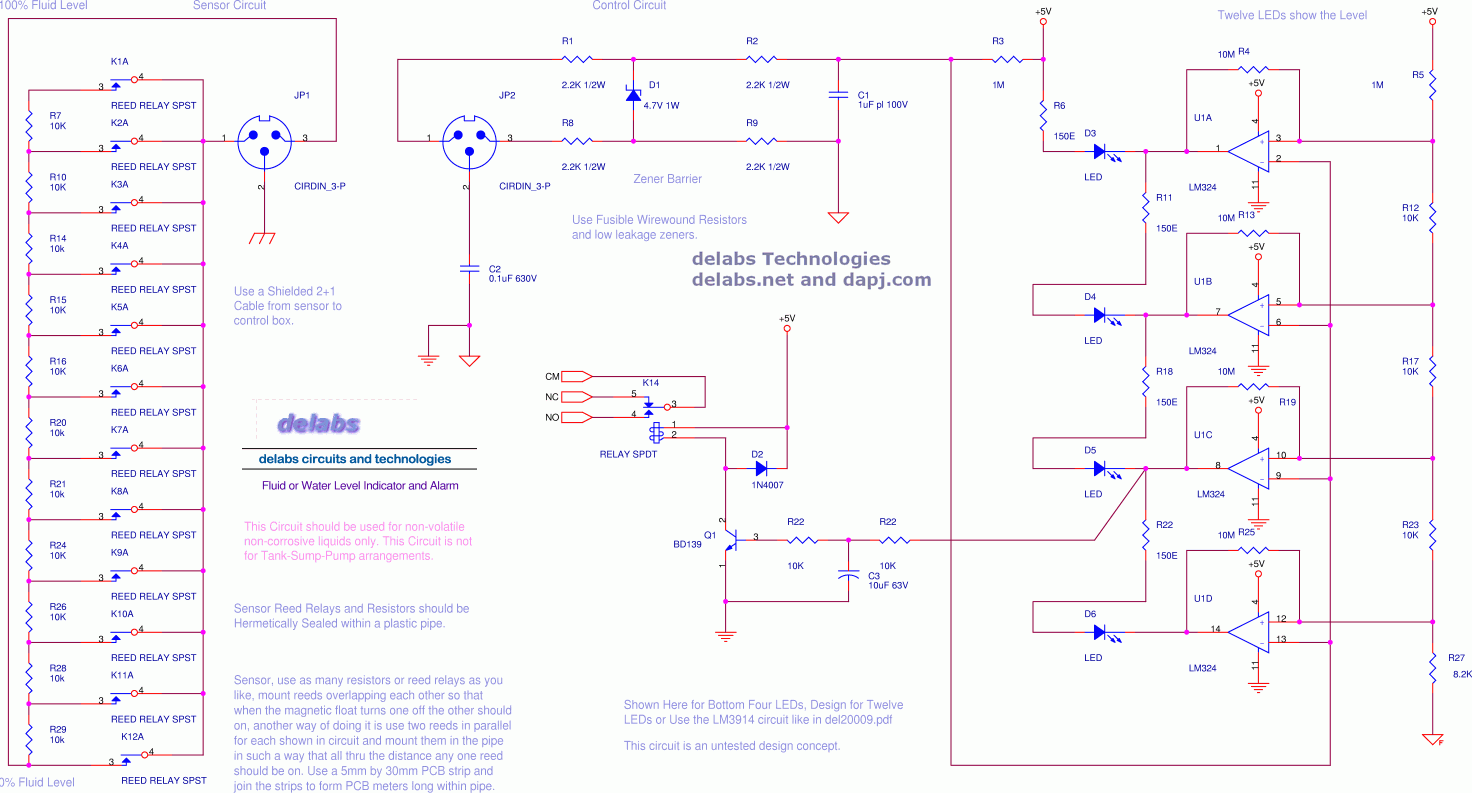
PNG-Schematic - PDF-Circuit - DSN SourceFluid or Water Level Indicator and Alarm - del20024
Reed Relay. It was invented by Dr. W. B. Ellwood at Bell Labs
in 1936. Contacts are in a sealed glass tube filled with inert
gas like in a bulb, so they do not corrode. It is faster than
regular relays and as no spring is used it has a longer
mechanical life. The two contacts are ferromagnetic blades
plated with rhodium.
When you take a magnet close by, the contacts touch each
other. You can also put the reed in a coil, then when you
energize the coil the reed operates. Used in
telecommunication.OKI is one manufacturer of this type of
component.
Ultra Sound Sender Detecter Diagram
Design and Caution.
When you drive inductive loads you have to use RC snubbers, freewheeling diodes, varistors or zeners. when you drive lamps the cold current is high so use thermistors. The Reed relay is best used in telecom and instrumentation and avoided in power electronics. It can handle high RF frequency as the path of current is straight and footprint small.
"When you use the DMM or digital multimeter, try not to use it for high voltages and currents, use external
shunts and attenuators instead. If you try to measure 230V AC
in the Ohms mode or in the Current mode with the probe in the
current socket then you will see fumes in your DMM and a hole
in your pocket !!"
external
shunts and attenuators instead. If you try to measure 230V AC
in the Ohms mode or in the Current mode with the probe in the
current socket then you will see fumes in your DMM and a hole
in your pocket !!" - Solderman Talks 1702
...
...
...
...
...
delabs Technologies
20th Mar 2020
...
The documents, software, tools and links are provided to enhance the ability of an electronics student, hobbyist or professional by sharing information. The information, links etc. should be used by the website visitor, at his or her own risk and responsibility. There may be concept, design and link errors in the pages.
Creative Work, ideas and documents of delabs can be used for Product Design and Development by R&D Engineers, Hobbyists, Students and even firms for creating useful products. These cannot be used for reprint, replication or publishing online or offline.